
2001: Time Machine Travels
JORVIK Viking Centre was meticulously designed using rigorous archaeological evidence to ensure an authentic experience. Visitors could step back in time and immerse themselves in the Viking-era setting, transported from the year 2001 to a faithfully reconstructed 10th-century York.
Updating the JORVIK Experience
Over 16 years, academic research provided deeper insights into Viking-age York, allowing JORVIK Viking Centre to enhance the visitor experience. When the centre re-opened on April 7, 2001, guests could immerse themselves in the daily life of its 10th-century inhabitants. Through an immersive time-travel experience, visitors were transported to October 25, AD 975, at 5:30 pm, offering a firsthand look at Viking culture and society.
The Time Machine
Stepping into JORVIK, visitors boarded a specially designed time machine. As the doors sealed shut, the machine lurched and shuddered, hurtling them backwards through time in a dizzying blur. An in-flight film chronicled the transformation of York’s streets and people over the centuries. Suddenly, with a jarring impact, the time machine malfunctioned, sending travelers too far back—to AD 866, when Vikings first invaded the city of York.
The Time Ride
Visitors then boarded suspended, six-seater capsules featuring cutting-edge time-travel technology. Beginning in AD 866, they journeyed through the war-torn Viking era before leaping over a century forward to the thriving city of JORVIK in AD 975.
Guided by TV historian Michael Wood, guests traveled past the homes and workshops of an antler worker, blacksmith, wood turner, and butcher. Arriving at the bustling Coppergate market, they encountered artisans such as a leather worker and a moneyer at work.
For the first time, animatronic Vikings populated the recreated city, vividly bringing 10th-century life to visitors. Turning a corner, they discovered evidence of a house damaged by fire over 1,000 years ago.
The journey concluded with a return to the 20th century, where visitors found themselves at the original Coppergate excavation site, watching the York Archaeological Trust uncover the Viking city they had just experienced.
Looking At The Evidence
Artefacts Alive
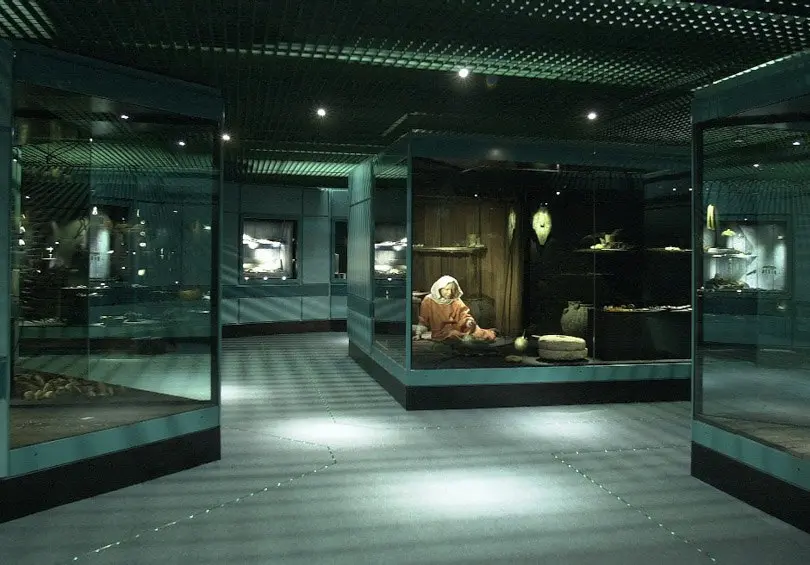
In January 2006, the gallery transformed into Artefacts Alive with state-of-the-art holographic technology bringing Viking history to life. Visitors came face to face with four Viking ghosts, each sharing their firsthand account of life in Jorvik. Among them were Mord, a silver-tongued leatherworker, and Drifa, a cheerful housewife. Also making appearances were the bumbling wood turner, Unni, and Grummi, the meanest blacksmith in JORVIK.