Viking Place Names
What if we told you that the Vikings are still part of everyday life in Britain? It might sound surprising, but many of our cities, towns and even streets (especially here in York) still have names that date back over 1,000 years. Let’s explore what these Viking place names can tell us about the people who once lived here.
Evidence of the Vikings
We can find evidence of the Viking Age all around us. Archaeologists make many of these discoveries during excavations, like our Coppergate dig, where archaeologists have uncovered the remains of houses, objects such as jewellery and clothing, and even the remains of Viking-age people (and in some cases, their preserved poo!).
However, some of the most fascinating evidence isn’t hidden underground at all. It is something we see and use every single day: the names of the places where we live.
Back in the 9th century (that’s the 800s), much of northern and eastern England was ruled by the Vikings. This area became known as the Danelaw. The name comes from the fact that Danish law was followed here, rather than the laws used in other parts of Anglo-Saxon England.
A treaty between Viking King Guthrum and Anglo-Saxon King Alfred defined the Danelaw in AD 880. The treaty described the boundary as:
“Up the Thames, and then up the Lea, and along the Lea to its source, then in a straight line to Bedford, then up the Ouse to the Watling Street.”
If that sounds a little confusing, don’t worry! In simple terms, the boundary created a line across England from London towards Bedford, before following the old Roman road of Watling Street.
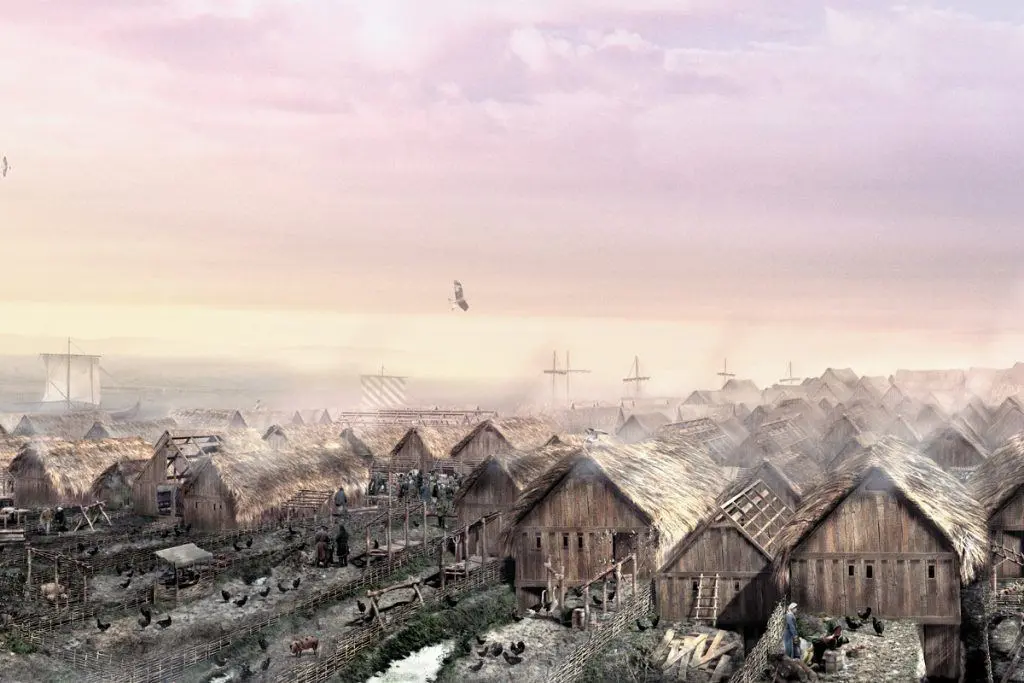
The Danelaw became the area where Viking settlement was most concentrated. That is why we find so many Viking place names there today. The area we now call Yorkshire had one of the largest Viking populations and was home to their most important city in England: Jorvik (you might know it today as York!).
Viking Place Names
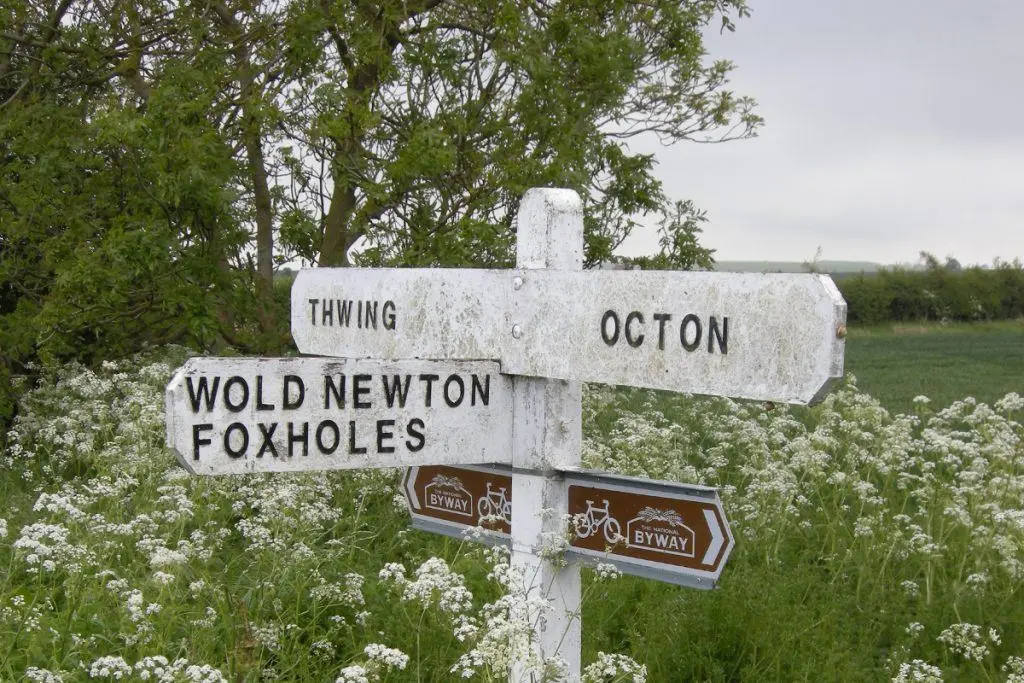
One of the easiest ways to spot Viking influence is by looking at the endings of place names. These are called suffixes, and they can give us clues about what a place was like over 1,000 years ago.
Viking Suffixes
Here are some examples of Viking place names and what they can tell us:
- -thorpe – A thorpe was a secondary settlement or small farm. These were often smaller communities that relied on a larger settlement nearby for trade and protection. One example is Copmanthorpe near York.
- -thwaite – This comes from the Old Norse word thveit, meaning a clearing or meadow. Places like Slaithwaite in West Yorkshire may have originally been areas where woodland had been cleared for farming.
- -toft – A toft was the site of a house or building. Places such as Lowestoft and Langtoft show how Viking words became part of the landscape.
- -keld – A keld was a spring or source of water. Threlkeld in the Lake District is one example.
- -ness – A ness was a headland or piece of land sticking out into the sea or a lake. Skegness is one example. In Scotland, names like Inverness use a different meaning, with ness referring to the mouth of a river.
- -by – The most common Viking place name ending in England, by meant a farmstead, village or settlement. Places such as Selby (translating to Village of Willows) and Whitby (white farm) still carry this Viking influence today.
- -kirk – Coming from the Old Norse word kirkja, meaning church, this ending appears in places such as Ormskirk. Orm was also a Viking personal name, so the name could suggest that a settler called Orm founded a church here – perhaps a sign of Vikings adopting the Christian beliefs already established in Britain. It’s a great example of how place names can reveal the different languages, people and beliefs that shaped England during the Viking Age.
Changing Names
Like any town or city that has been around for a long time, names can change as different people live there. These changes can give historians and archaeologists clues about who once lived in an area.
When York was first founded by the Romans, it was called Eboracum. Later, when the Anglo-Saxons settled here, the city became known as Eoforwic, which historians think means “wild boar settlement”. By the Viking Age, the name had changed again to Jorvik, which is thought to mean “wild boar creek”. One possible explanation is that the Vikings had trouble saying the original Anglo-Saxon name and adapted it into something that better suited their own language. After all, if you were in charge of a city, you would probably want to be able to pronounce its name!
Another example is Skelton, which people originally called Shelton. The interesting thing about this name is that the ending -ton does not come from Old Norse, the language spoken by the Vikings. Instead, it comes from Old English, the language of the Anglo-Saxons, and means an enclosure or farmstead.
Names of People
Sometimes settlements were named after important individuals. We still do this today — Washington, D.C. in America, for example, was named after George Washington. Although we do not have many records of the early Viking settlers who arrived in Britain, we can still find clues about them in place names.
As with Ormskirk, other places contain Viking personal names too. Grimsby, for example, means “Grimr’s farm”, while Scarborough comes from “Skarth’s stronghold”. Historians have discovered that Viking nicknames were sometimes just as important as given names. For example, Keik means “bent backwards” and appears in Kexby, meaning “Keik’s farmstead”. Another example is Sleng, which means “idler” or “lazy” and was also used as a personal name. It appears in Slingsby, meaning “Sleng’s settlement” (although we suspect the Vikings probably would not have been too pleased about being remembered as the village of the lazy people!).
Place names could also describe the landscape around them. Langthwaite means “long clearing”, Selby means “the village with willows” and Thirsk comes from the Norse word for “marsh” or “fen”.
Viking York
We’ve already touched on this a little, but York itself is full of clues about its Viking past. One of the biggest clues can be found in the names of its streets. If you have explored York, you may have noticed that many streets end in -gate. This comes from the Old Norse word gata, meaning “street”. In York, it’s important to remember that gate means street, while bar means gate.
You can see this in names such as Monkgate, which roughly means “Monk Street”, and Monk Bar, which means “Monk Gate”. It might sound confusing at first, but once you know this little Viking secret, York’s streets start to make a lot more sense.
Coppergate
The street where JORVIK is located, Coppergate, also comes from its Viking name: Koppari-Gata. We know that gata means street, but koppari means cup-maker, meaning Coppergate translates as “Street of the Cup-makers”. This name gives us an important clue about what happened here over 1,000 years ago. During the Coppergate excavation in the 1970s, archaeologists discovered hundreds of wooden objects, along with wood shavings and tools used for making cups and bowls. The evidence suggests that this really was a street where skilled craftspeople made and sold wooden goods.
Another example is Bootham, the main road leading north-west out of York. Its name comes from the Old Norse words meaning “at the booths” or “near the market stalls”, giving us a clue that this area may have once been connected to trading. The many origins and stories behind villages, towns and cities across Yorkshire and beyond show that, despite more than 1,000 years of change, the Vikings have left a lasting mark on the places we live.
So if you think the name of your town seems a bit simple, you may find it holds key details about the past and legacy of your home. Or maybe, it could have been a village of lazy Vikings!