
Viking Travel
What was Viking travel really like? Discover how Vikings prepared for long journeys, travelled across land and sea, and reached destinations such as Jorvik.
Vikings often travelled from their homes in Scandinavia during the warmer months. Many journeys were for trade, while others were for raiding or exploring new places. The calmer seas and longer days made it easier to sail long distances across Europe.
Today, travel is often for holidays, relaxation, and time with family and friends. In the Viking Age, journeys were more demanding and far less predictable. This is how a Viking journey might have worked, step by step.
Gather supplies
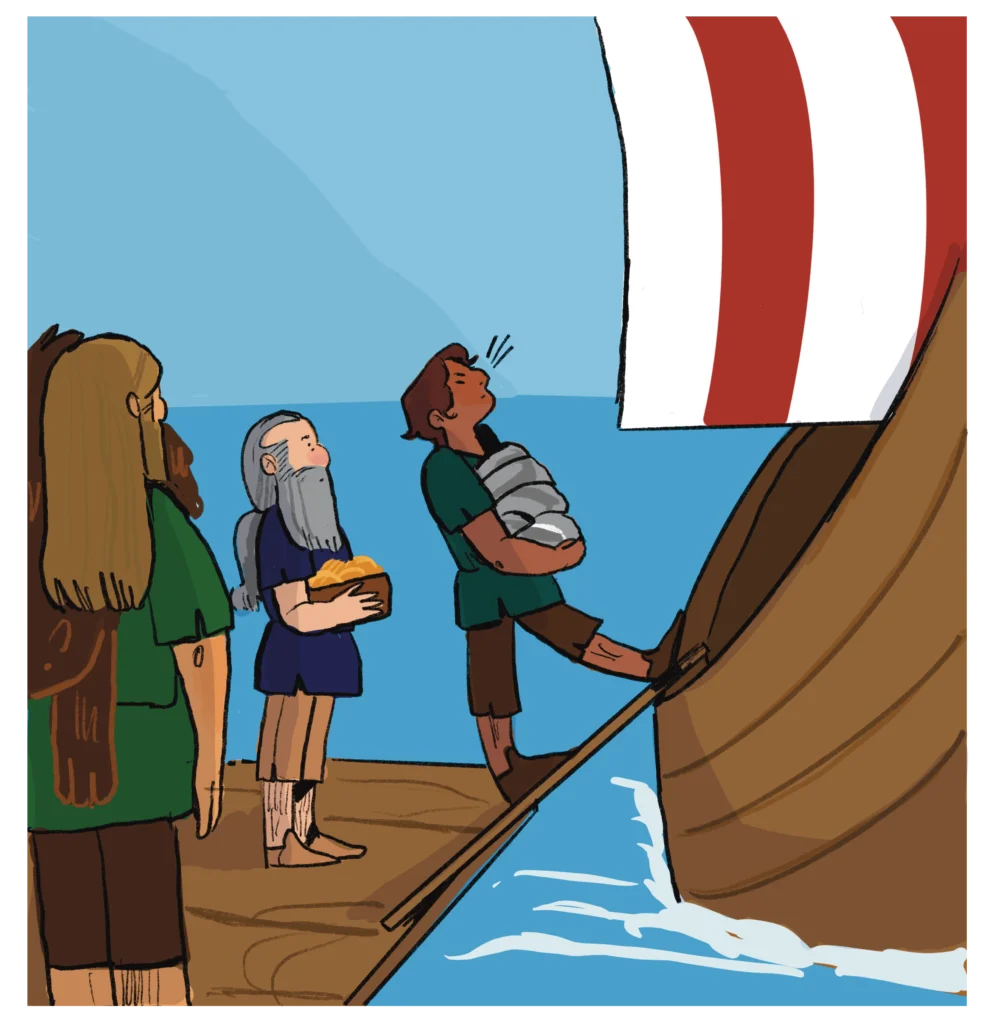
Before setting out, Vikings spent weeks preparing for travel. They needed food that would last at sea. This included dried biscuits, salted meat and fish, and thick porridge.
Open fires were not possible on wooden ships, so food had to be prepared in advance. However, journeys were rarely non-stop. Vikings often made stops along the way, camping on the shore to cook and rest when needed.
Vikings also gathered goods to trade. These included amber, furs, animal skins, whale bone and honey. These items were valuable in foreign markets and had to be collected well before departure.
Pack your belongings
Like travellers today, Vikings packed the items they needed for their journey. Belongings were stored in wooden chests. These held clothing, tools and other essentials and helped protect them from sea spray and weather.
Space on Viking ships was limited. As a result, chests often had a second use as seating during long journeys.
To find out more, see our article: What would a Viking Pack?
Set sail
Travel in the Viking Age usually meant travelling by sea. Vikings used longships designed for speed and flexibility. Most rowing was carried out by adult men, although enslaved people may also have taken part on some voyages. Sailing required teamwork, strength and endurance.
Children were sometimes present on ships and were taught sailing skills, although they would not have taken part in rowing. Journeys could last days or even weeks, depending on distance and weather conditions.
Life on board
Life at sea could be difficult. Conditions were often cold, wet and cramped. There was little shelter from wind and rain, and the sea could change quickly and without warning.
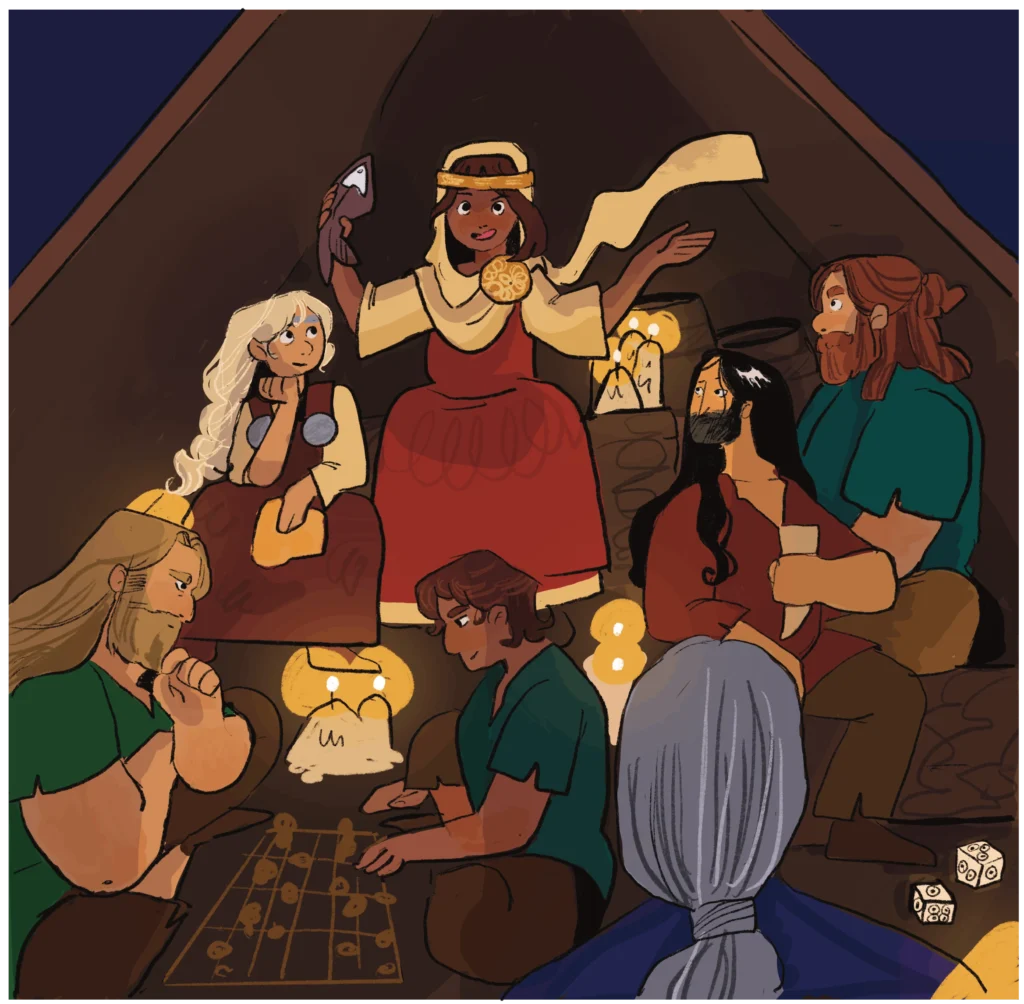
Time passed slowly on long journeys. To help with this, sailors may have shared stories, repaired equipment, or played dice and board games. Ships were also sometimes home to cats, which helped control mice that might otherwise damage or steal supplies.
Navigation relied on previous sailing experience, the position of the sun and stars, and knowledge of coastlines. There were no maps like those used today, so travellers depended on skill, memory, and guidance passed on from other sailors who had taken the journey before
Arriving at your destination
Reaching land did not mean the journey was over. If Vikings travelled to places like York (Jorvik), they could sail directly up the River Ouse into the heart of the city. This made it an important centre for trade and travel.
In other cases, travellers continued on foot or by river to reach inland settlements. Some Vikings also acquired horses after landing. These were not always obtained legally, and there are records suggesting that horses were sometimes creatively acquired (stolen) from local farmers to continue their journey.
What did Vikings do when they arrived?
Once they reached their destination, Vikings quickly began their work. Many travelled to trade, exchanging goods such as amber, furs and metalwork for silver, textiles and other valuable items. Markets in places like York were busy and active centres of exchange.
Some joined raiding parties, targeting coastal or riverside settlements. These raids relied on speed, planning and surprise. In some cases, locals would pay raiders instead of having their belongings stolen. Either way, these encounters could still result in the Vikings making their fortunes.
Others settled in new places. They built homes, adopted local customs and sometimes married into local communities. Over time, this helped create shared cultures in places like Viking-age York.
As summer came to an end, many groups prepared once again for the journey home, repeating the cycle of travel each year.
What do we learn about the Vikings from their Travels?
Viking journeys were not simple holidays. They required planning, skill and resilience.
Travel shaped how Vikings traded, explored and connected with other communities. It also helped spread goods, ideas and culture across large parts of Europe.
Although modern travel is far easier, the Viking experience shows how important preparation, teamwork and navigation once were for long-distance journeys.