
Viking Jewellery
What can Viking Jewellery tell us about life in Jorvik? Discover how it helped people dress, display their wealth and express their identity.
Jewellery was more than decoration in Viking-age York. Brooches fastened clothes, beads added colour and arm rings could show wealth and status. Today, these objects help archaeologists learn about the people who lived, worked and traded in Jorvik.
During excavations at Coppergate between 1976 and 1981, archaeologists found brooches, pins, beads, arm rings, buckles and strap ends. Together, these objects reveal how people dressed, expressed themselves and connected with communities across the Viking world.
Disc Brooches
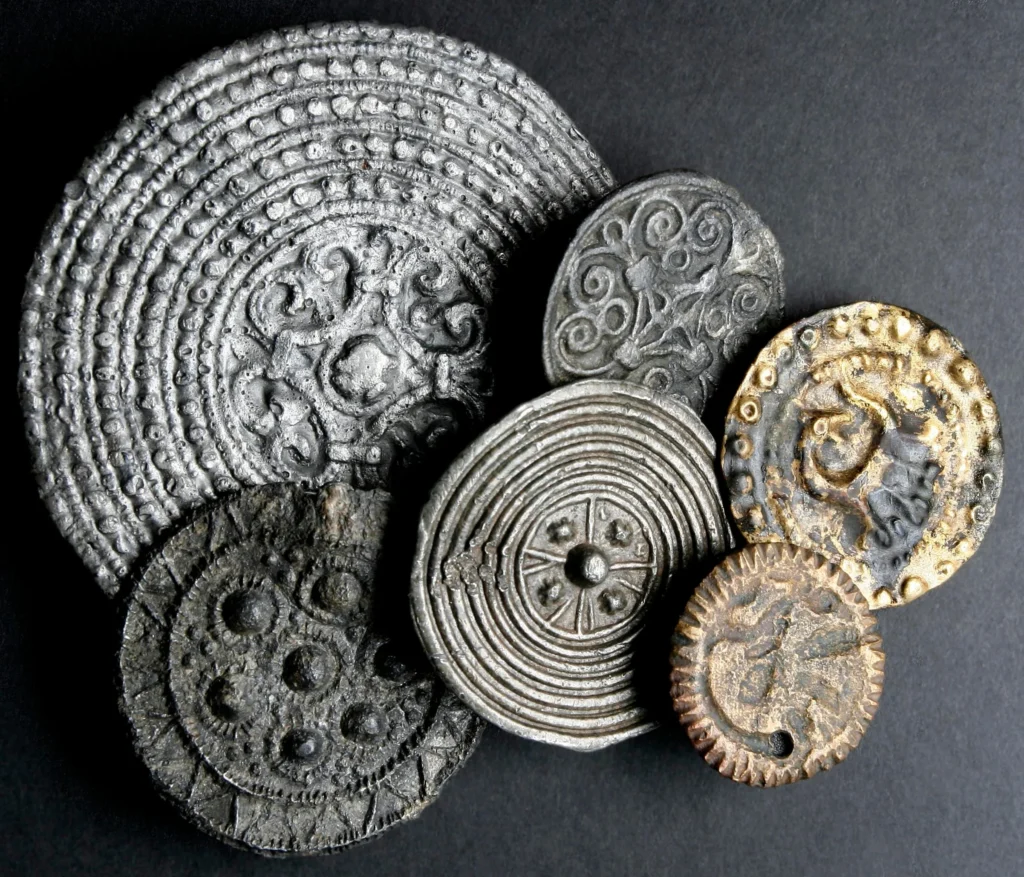
Before zips and buttons became common, many people used brooches to fasten their clothes. Disc brooches were practical items, but they could also show off a person’s style.
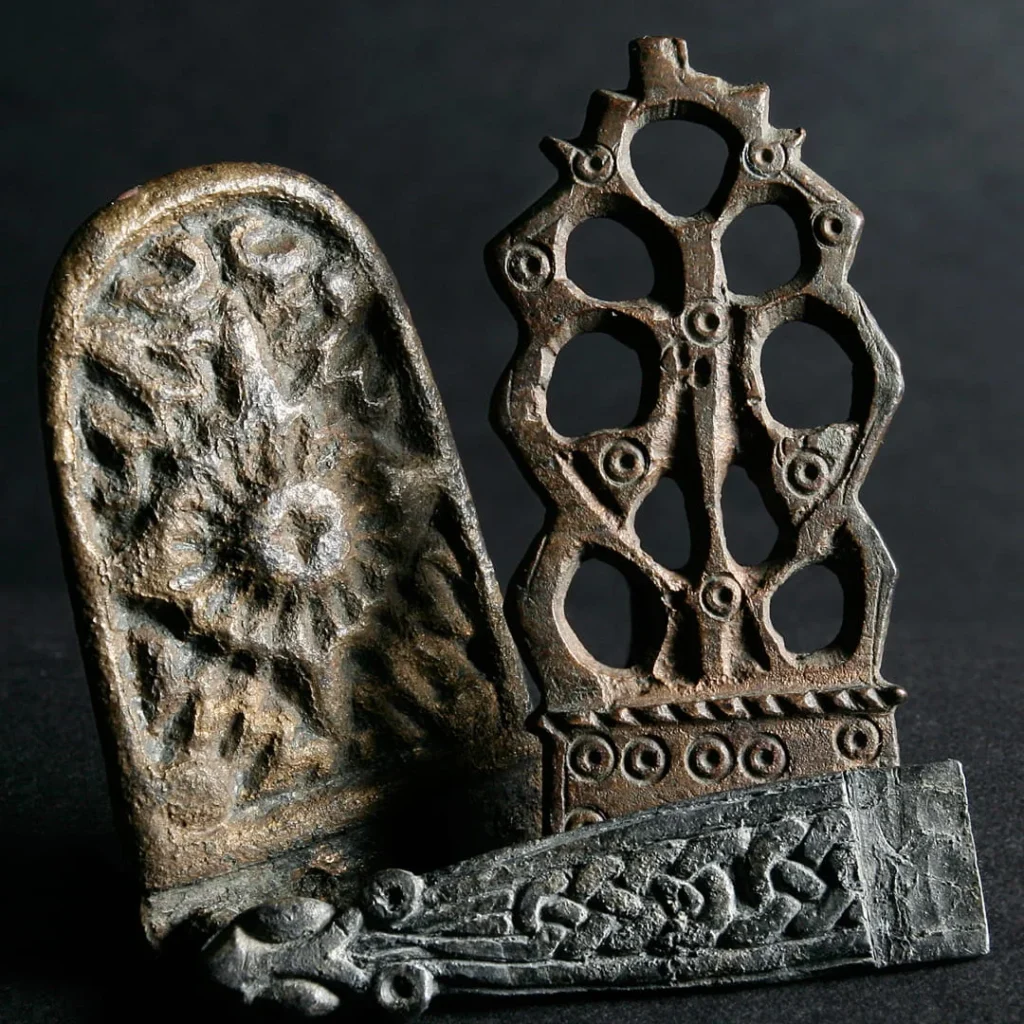
One copper-alloy brooch is decorated with a backward-facing animal. Its design combines Anglian and Scandinavian artistic traditions, including elements of the Viking Jellinge style. This blend of influences shows how ideas and artistic practices were shared between different communities.
By AD 954, when the last Viking king, Eric Bloodaxe, was expelled from York, Vikings and local people had lived alongside one another for generations. Through intermarriage and the sharing of customs, they helped create a distinctive Anglo-Scandinavian culture that survived until the Norman Conquest in AD 1066.
Another disc brooch, made from pewter—a metal composed mainly of tin—is decorated with concentric rings of dots. It closely resembles a brooch discovered at Hedeby, an important Viking trading centre in present-day Germany. This similarity may suggest that large numbers of such brooches were produced in York. If so, it provides evidence that the city supported a successful manufacturing industry centuries before the Industrial Revolution.
Bone Pins
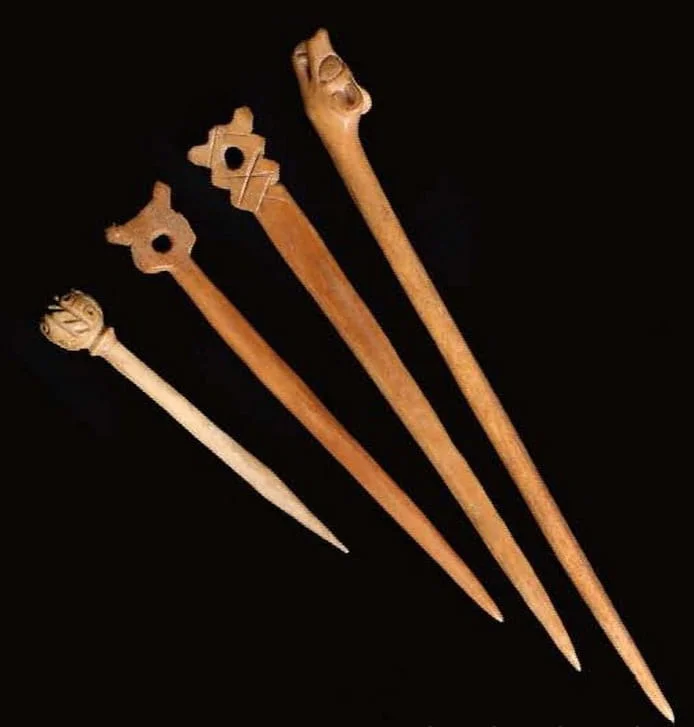
If a Viking wanted to fasten a cloak or keep their hair in place, a bone pin could be very useful.
Some examples are plain and functional, while others are decorated with dragons and other animals. Similar pins have been found in Shetland and Scandinavia, highlighting the strong trade and cultural links that connected York to the wider Viking world.
Large quantities of animal bone were recovered from Coppergate. These remains demonstrate the importance of animals in everyday life and show that bone was an important raw material for local craftspeople.
Many bone objects were made using a technique known as groove-and-splinter. First, craftspeople cut deep grooves into the bone. Next, they split it into narrow strips. Finally, they smoothed and shaped the pieces using rough stones until they were ready to use.
Glass Beads
Brightly coloured beads helped add colour and decoration to Viking clothing and jewellery.
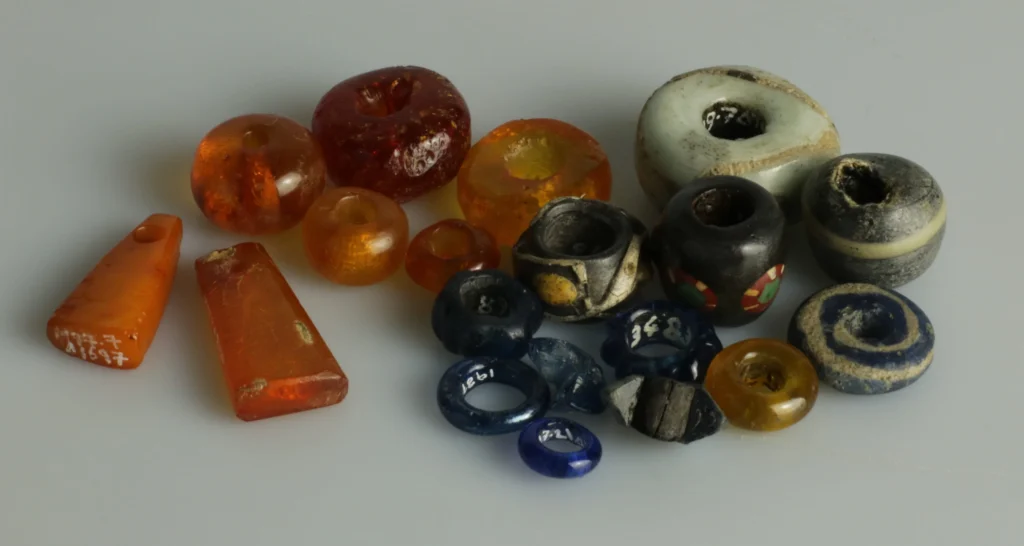
Archaeologists found almost 300 glass beads at Coppergate. Most were blue, green or yellow, although a few orange examples had been covered with gold foil to create a more luxurious appearance. Their colours would have stood out against woollen clothing and caught the light as people moved.
People probably wore these beads on necklaces alongside amber and jet. Amber and jet were also used to make finger rings.
The amber may have come from Scandinavia and the Baltic region, while some of the glass beads were probably made in York itself. Archaeologists discovered evidence of glassworking at Coppergate, including a furnace and crucibles. Crucibles were heat-resistant containers used for melting materials.
Glassworkers heated glass until it became soft and then shaped it using specialised tools. The finished beads could be worn as jewellery or used to decorate other objects. For example, some may have been attached to items such as tweezers.
Ring Pins
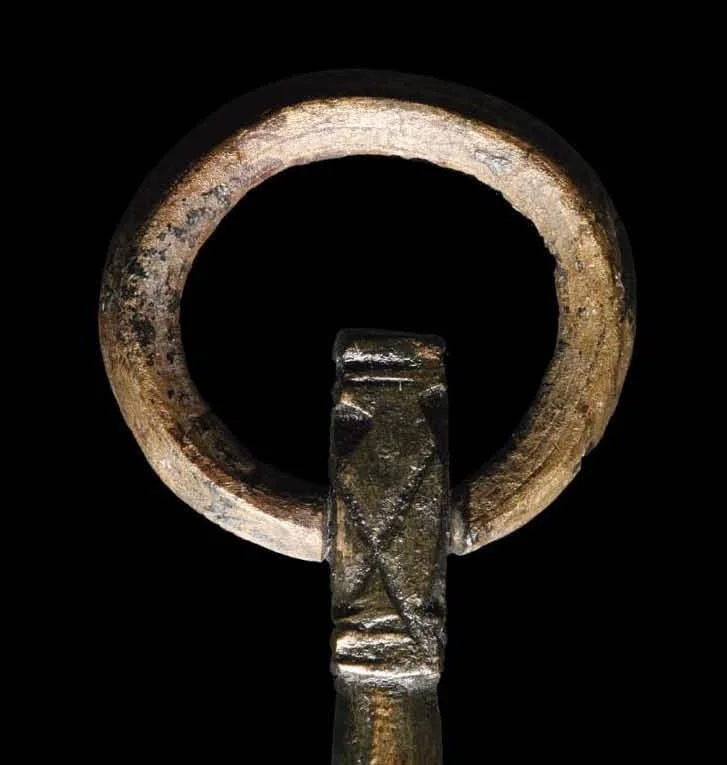
A ring pin might seem like a small object, but it can tell us a surprising amount about Viking trade. Ring pins were long, sturdy pins with a ring attached to the head. A cord could be wrapped around the pin and threaded through the ring to help keep it securely in place.
These objects are particularly associated with Dublin and other Viking communities around the Irish Sea. Their discovery at Coppergate suggests that York maintained close trade and political links with Dublin and the wider Hiberno-Norse world.
Most ring pins were made from copper alloy. Although decorative, they also had practical uses. People could use them to fasten clothing or attach cords and straps.
In most cases, the pin and ring were made as a single object. However, some examples were repaired or altered using different materials. This suggests that people often repaired and reused their possessions rather than replacing them.
Arm Rings
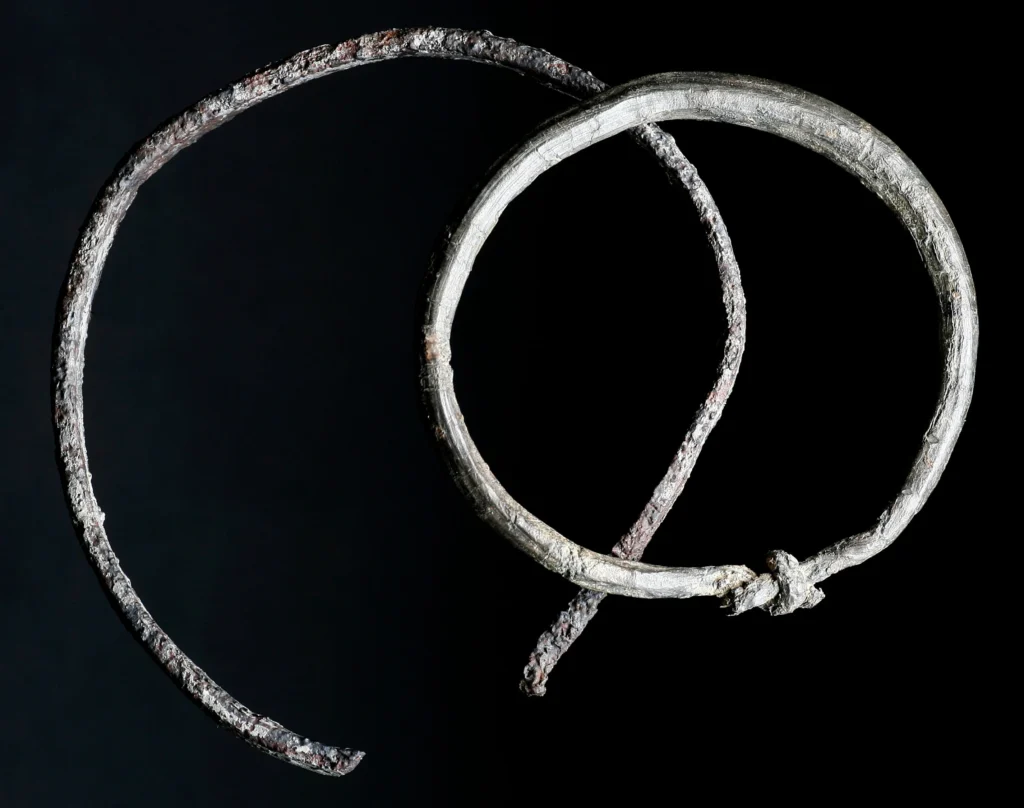
Just as people today might wear expensive jewellery or designer brands, Vikings sometimes wore arm rings to display their wealth and status.
Archaeologists have found arm rings throughout Britain and Scandinavia, particularly in hoards—collections of valuable objects buried or hidden for safekeeping.
Many arm rings were made from silver and other precious metals. Others were produced from lead, copper alloy, pewter or iron. One example in our collection is made from iron but coated with tin to imitate the appearance of silver. It seems that people have always enjoyed following fashions.
Arm rings survive in a variety of sizes. This may suggest that they were worn by people of different ages, although we cannot be certain.
Some examples have looped ends that may have helped prevent them from slipping off. However, these loops may simply have been a popular design feature.
Buckles and Strap Ends
Jewellery was not the only way Vikings decorated what they wore. Even everyday items such as belts could be carefully made and decorated.
Buckles and strap ends were common components of Viking belts, although some buckles were also used as horse fittings.
Archaeologists recovered almost 100 buckles from Coppergate. Many feature detailed decoration. Most are D-shaped and less than an inch wide, a form also found across England and Scandinavia.
Many buckles were made from iron, while others were made from copper alloy. One example appears to have been coated with silver.
Strap ends were attached to the loose end of a belt. Since Viking belts did not include loops to hold the end in place, the added weight helped the belt hang neatly and prevented the end from becoming worn or damaged.
Strap ends were made from materials including bone, antler, iron, lead and copper alloy. Their decoration reflects a variety of cultural influences. Some feature Anglo-Saxon animal designs, while others use Viking Borre-style patterns. A few were inspired by artistic traditions from mainland Europe.
What Can Viking Jewellery Tell Us?
Viking jewellery was much more than decoration. These objects helped people fasten their clothes, display their wealth and express their identity.
Today, brooches, pins, beads, arm rings, buckles and strap ends help us understand the lives of the people who lived in Jorvik. They reveal evidence of trade, craftwork and daily life, while also showing how different cultures influenced one another.
The discoveries from Coppergate remind us that Jorvik was a thriving centre of trade, industry and creativity. Through these objects, we can still see the connections that linked York to communities across Britain, Ireland, Scandinavia and beyond.