
Gods, Giants and Sea Monsters
What did myths and tales did the Vikings believe or tell about the sea? What Gods, Giants and Sea Monsters lurked in their depths?
The Vikings were some of the greatest sailors in the world. They crossed seas to trade, explore and settle new lands. However, travelling by sea could be dangerous. Storms could appear without warning, ships could be wrecked on hidden rocks and sailors often found themselves far from home.
It’s no surprise, then, that the sea played an important role in Norse mythology. Vikings told stories about gods who ruled the waves, protected sailors and controlled the weather. They also imagined terrifying monsters lurking beneath the surface.
So, what did Vikings believe was waiting for them beyond the horizon?
A Quick Note on Viking Names: Some Viking gods and monsters have unusual names. Don’t worry if you’re not sure how to say them. We’ve included a simple pronunciation guide the first time each name appears.
Gods
Ægir and Rán
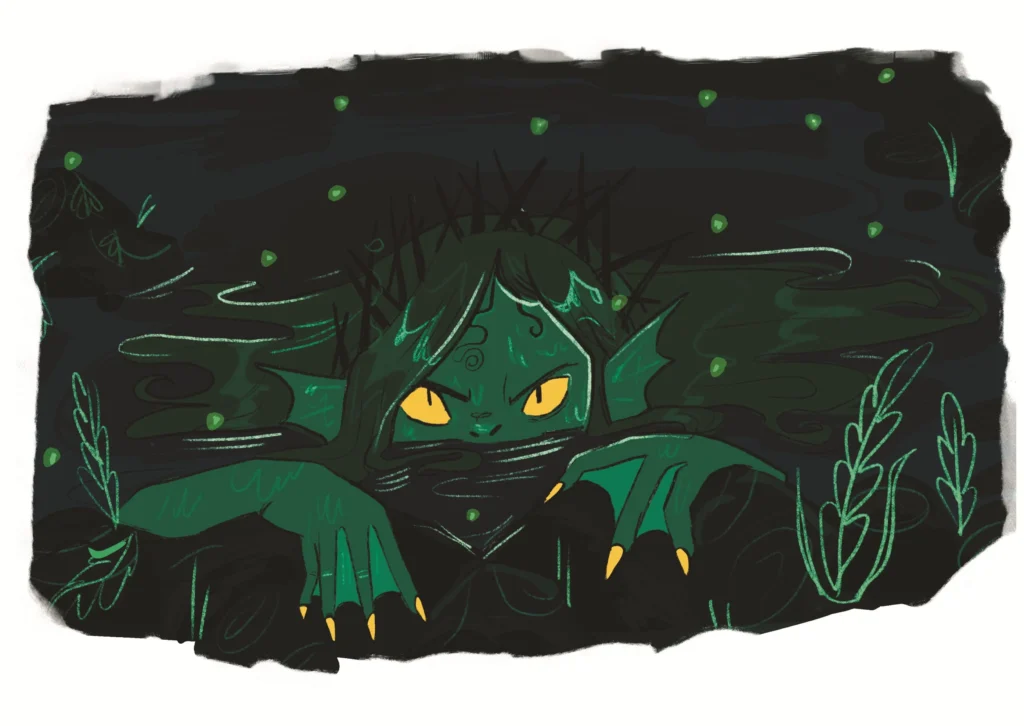
Rán (rawn) and Ægir (ay-gir) were the gods most closely linked to the sea.
Ægir was a giant who ruled over the oceans. According to Norse stories, he was famous for brewing beer and hosting feasts for the gods in his magnificent hall beneath the waves. Because fire could not burn underwater, the skalds said his hall was lit by glowing gold instead.
While Ægir represented the sea’s riches, his wife Rán represented its dangers.
Her name may come from an Old Norse word meaning “theft”. Vikings believed that anyone who drowned at sea had been taken by Rán and dragged beneath the waves in her enormous net.
The pair appeared frequently in Viking poetry. Skalds (that’s Viking poets) often used kennings, special poetic phrases, when talking about the sea. Gold might be called “Ægir’s fire”, while the seafloor could be described as “Rán’s bed”.
According to legend, Ægir and Rán also had nine daughters, each representing a different type of wave.
Njord
Njord (nyord) had the power to calm the sea, wind and fire. Because of this, Vikings hoped he would bring them success in fishing, trade and travel.
Njord belonged to a group of gods called the Vanir. After a war between the Vanir and Odin’s gods, known as the Æsir, peace was agreed and Njord came to live among the other gods.
One of the most famous stories about Njord involves his wife, Skadi (skah-dee).
Njord loved to be by the sea. Skadi preferred snowy mountains, where she could ski and hunt. The couple tried splitting their time between the coast and the mountains, but neither was happy. Njord complained that wolves howled all night in the mountains, while Skadi said the cries of seabirds kept her awake by the sea.
Their story reminds us that even gods could struggle to get a good night’s sleep.
Odin
Odin was the ruler of the Norse gods and played a role in the creation of the world itself.
According to Norse mythology, Odin and his brothers created the world from the body of a giant named Ymir (ee-mir). His flesh became the land, his skull became the sky and his blood became the seas.
Odin appears as a guide in many stories. In one tale, he helped two young princes who became lost at sea while fishing. After teaching them valuable skills, Odin helped his favourite return home and become king, but only after abandoning his brother at sea. Like many Norse myths, this taught that Odin could be wise and helpful, but sometimes ruthless.
Thor

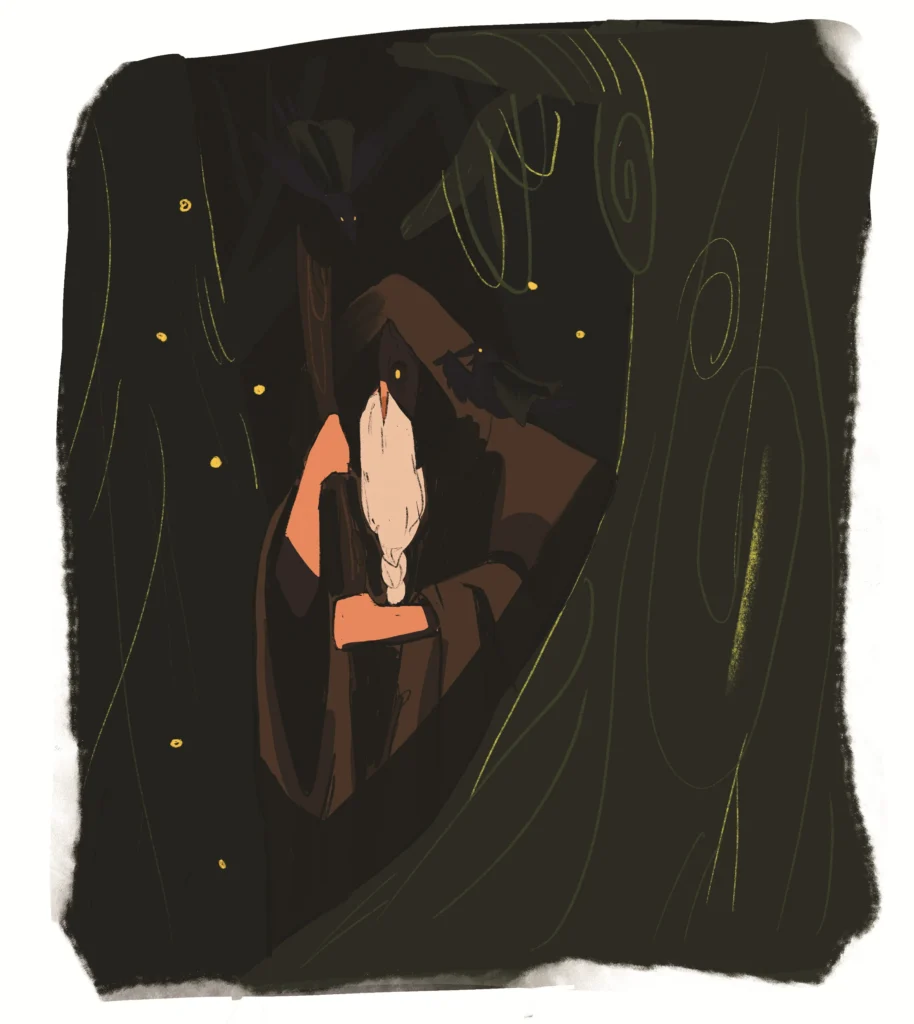
Thor was the god of thunder and storms, but he also appears in several famous stories involving the sea.
In one tale, Thor visited the giant king Útgarða-Loki (oot-gar-tha loh-kee) and was challenged to a drinking contest. Unknown to Thor, the drinking horn had been magically connected to the sea itself. No matter how much he drank, he could not empty it. However, he managed to lower the level of the oceans so much that he accidentally created the first low tide.
Thor also famously went fishing and caught Jörmungandr (yor-mun-gand-er), the giant Midgard Serpent. While sailing with a giant named Hymir (hee-mir), Thor used an enormous baited hook and very nearly succeeded in catching the monster before Hymir cut the fishing line, as he was scared they would sink. This encounter became one of the most popular scenes in Viking art.
Archaeologists have found depictions of this story on runestones in Denmark and Sweden, as well as on the Gosforth Cross in Cumbria.
Loki
Loki was the god of mischief and trickery. Although he is not usually associated with the sea, he often used it to either cause or escape from trouble.
In one story, Loki transformed himself into a seal to steal a necklace from the goddess Freya while she was at the beach. In another, he became a salmon and tried to hide in a river after angering the other gods during a feast hosted by Ægir. It didn’t work, however, as the gods caught him with a net Loki himself designed. Some versions of the tale say this was how humans learned to use fishing nets.
These stories show that Loki could change shape whenever it suited him, making him one of the most unpredictable figures in Norse mythology.

Monsters
Jörmungandr

Jörmungandr (yor-mun-gand-er), also known as the Midgard Serpent, was the most famous sea monster in Norse mythology.
The child of Loki and the giantess Angrboða (ang-er-bo-tha), Jörmungandr was cast into the sea by Odin. There he grew so large that he eventually wrapped himself around the entire world.
Jörmungandr and Thor were destined to be enemies. According to Norse mythology, they would meet one final time during Ragnarök (rag-na-rok), the battle that would bring about the end of the world. Thor would succeed in killing the serpent, but the serpent’s venom would kill Thor shortly afterwards.
The creature appears frequently in Viking-age artwork, showing how important this story was to Norse people.
Lyngbakr and Hafgufa
Not all sea monsters were giant serpents.
In the Saga of Ǫrvar-Oddr (or-var odd-er), the hero Oddr (odd-er) encountered two of the strangest monsters in the sea: Lyngbakr (ling-back-er) and Hafgufa (haff-goo-fa).
Lyngbakr meant Heather-Back, because it was said to resemble a small island covered in heather. Unsuspecting sailors would land on its back, only to discover too late that the island was actually a giant sea monster diving beneath the waves. Oddr avoided this trap, but several of his men were not so lucky.
As he sailed away, another danger appeared. What looked like a row of rocks turned out to be the teeth of Hafgufa, a colossal sea monster waiting with its mouth open. Hafgufa meant Sea-Reek, because its foul burps attracted fish, which it used to lure in larger prey before swallowing everything between its teeth.
What Can These Stories Tell Us?
The sea was at the heart of Viking life. It connected people through trade, travel and exploration, but it could also be dangerous and unpredictable.
Stories about gods such as Ægir, Rán and Njord helped explain the power of the sea, while monsters such as Jörmungandr, Lyngbakr and Hafgufa represented the dangers that sailors faced beyond the horizon.
Today, these myths help us understand how Vikings viewed the world around them. They remind us that the sea could be both generous and terrifying, offering wealth and opportunity one day and danger the next.
The next time you stand beside the sea, imagine what a Viking sailor might have seen. Was that really an island in the distance—or could it have been a giant sea monster waiting beneath the waves?